Commercial electrical companies are increasingly involved in helping businesses rethink how they use and manage electricity. Battery energy storage systems are becoming an important part of this shift because they allow organisations to store electricity and use it when demand, operational conditions or supply requirements change. For commercial properties, this can create a more flexible approach to managing power instead of relying entirely on immediate grid availability.
Battery storage is not simply a backup arrangement. It can become part of a wider energy strategy that supports operational continuity, demand management and better use of locally generated electricity. As businesses review their long-term infrastructure plans, understanding where storage fits can help them make more informed investment decisions.
Commercial Electrical Companies and the Changing Role of Battery Storage
Traditional commercial power planning generally focuses on distributing electricity safely to different areas of a building. Battery storage introduces another layer because electricity can be retained and released according to operational requirements. This gives businesses greater control over when stored energy becomes available.
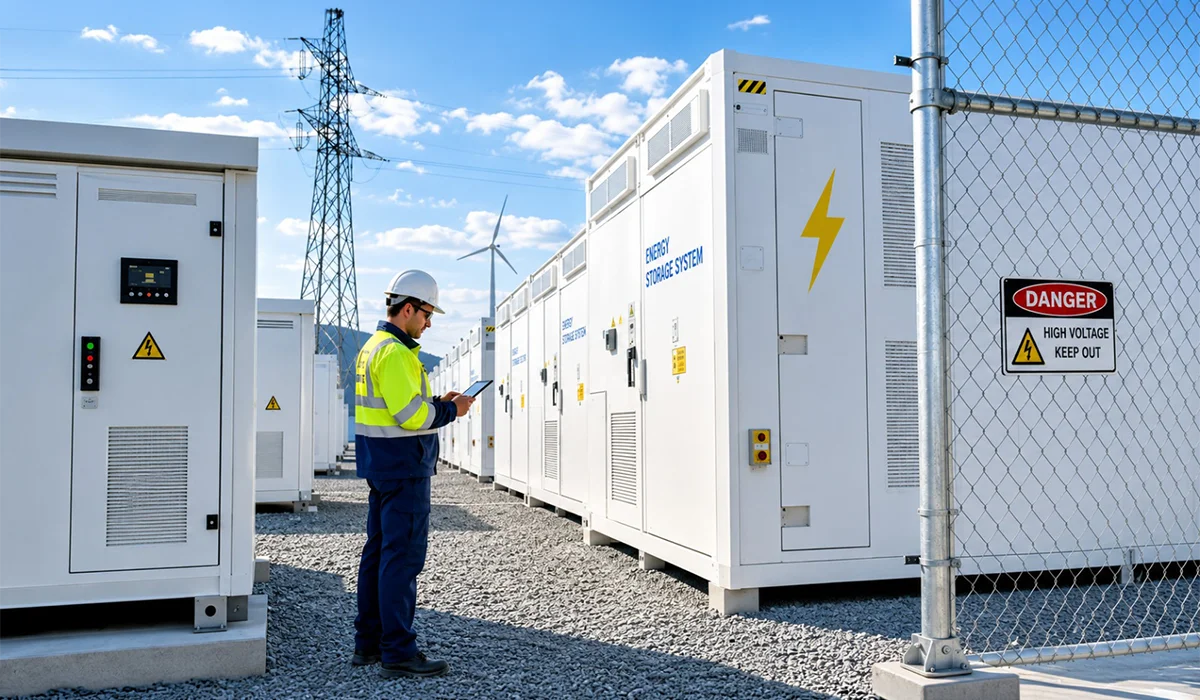
A battery energy storage system, commonly referred to as BESS, normally includes batteries, power conversion equipment, control systems and safety components. The complete arrangement needs to be considered as one system rather than treating the battery itself as the only important element.
Businesses may consider storage for several reasons:
- Reducing dependence on electricity during selected periods.
- Supporting essential operations during short power interruptions.
- Making better use of electricity generated by renewable sources.
- Managing changing demand across different operating hours.
- Creating greater flexibility for future energy requirements.
The right application depends on the property’s electricity profile. A warehouse with large equipment loads will have different requirements from a corporate office, retail centre or mixed-use development.
Why Battery Storage Matters for Commercial Properties
Electricity demand rarely remains constant throughout the day. Offices may experience higher consumption during working hours, while retail facilities can have different peaks depending on customer activity. Battery storage provides an opportunity to respond to these variations by shifting some energy use away from periods of higher demand.
This does not mean every business will achieve the same financial or operational result. The value of storage depends on factors such as electricity consumption patterns, battery capacity, system efficiency, available space and the intended operating strategy. A proper assessment should therefore come before equipment selection.
Businesses considering storage can examine:
- Daily electricity consumption patterns.
- Periods of high and low demand.
- Critical equipment that needs continued operation.
- Available installation space and access requirements.
- Expected battery lifespan and replacement considerations.
These factors can help decision-makers understand whether storage is suitable for their property. They can also provide a clearer basis for comparing different system capacities and configurations.
Integrating Storage With Existing Electrical Infrastructure
Battery storage cannot be viewed in isolation from the building’s existing electrical network. Connection points, distribution equipment, protection arrangements and available capacity all influence how a system can be incorporated. A technical assessment can identify whether existing infrastructure requires modification before the battery system is introduced.
Professional electrical installation services should account for the complete connection between storage equipment and the building’s distribution network. This includes appropriate equipment positioning, cable routes, protection measures and access for future inspection. Good planning at this stage can reduce complications during commissioning.
Electrical services should consider how stored power will be controlled, monitored and distributed according to the building’s operating requirements. Depending on the project, the system may be configured to charge during selected periods and discharge when required. Controls should reflect the property’s actual operating profile rather than relying on a generic schedule.
Battery Storage and Business Continuity
Unexpected power interruptions can affect more than lighting and basic building services. Offices may lose access to critical systems, commercial facilities may experience operational delays, and equipment can be affected by sudden interruptions. Battery storage can provide an additional layer of resilience when designed for suitable loads.
However, storage capacity must match the purpose for which it is intended. A system designed to support essential equipment for a short period will have different requirements from one expected to operate larger portions of a building. Clear identification of critical loads is therefore an important part of planning.
For example, businesses can identify:
- Emergency and life-safety systems.
- Critical communication equipment.
- Security and access-control systems.
- Essential IT infrastructure.
- Selected operational machinery.
This approach avoids treating the entire building as one load. Instead, the business can determine which functions have the greatest operational importance and assess how storage could support them.
Managing Peak Electricity Demand More Strategically
One of the most interesting applications of battery storage is the ability to manage periods when electricity demand rises significantly. Instead of drawing all required power from the grid at the same moment, stored energy can potentially supplement the supply during selected high-demand periods.
This strategy requires accurate information about how and when the building consumes electricity. Metering data can reveal recurring demand patterns and help engineers determine whether battery discharge could provide practical value. Without this analysis, installing a larger battery does not automatically guarantee better performance.
For commercial properties, commercial electrical services can support the wider assessment of distribution capacity, equipment requirements and operational priorities. The aim is to create an energy strategy that works with the building’s actual needs rather than simply adding another technology to the electrical system.
The Connection Between Renewable Energy and Battery Storage
Battery storage can become particularly useful when a commercial property produces electricity from renewable sources. Solar generation, for instance, may not always coincide with the building’s highest consumption period. Storage can provide a way to retain some generated electricity for later use.
This can improve the practical value of on-site generation because electricity does not necessarily need to be consumed immediately. During periods of strong generation, surplus electricity may be directed towards charging the battery, subject to the system design and applicable requirements.
The combination can offer several advantages:
- Better alignment between generation and consumption.
- Greater flexibility in how renewable electricity is used.
- Reduced reliance on immediate grid supply during selected periods.
- Improved visibility of energy production and consumption.
- Greater control over future energy planning.
The effectiveness of this approach depends on the size and timing of both generation and demand. Careful system modelling is therefore more useful than selecting equipment based solely on its advertised capacity.
Safety and Maintenance Considerations
Battery systems require appropriate safety planning throughout their operational life. Equipment needs suitable installation conditions, protection systems, monitoring and regular inspection. Environmental factors, ventilation, access and equipment clearances should be considered during the planning stage.
Routine electrical maintenance services can help identify changes in system condition and support continued reliable operation. Maintenance requirements will depend on the technology and system design, so businesses should follow the manufacturer’s recommendations alongside applicable technical requirements.
Ongoing management may include:
- Checking system performance and alarms.
- Inspecting connections and associated equipment.
- Reviewing battery performance data.
- Confirming protection systems remain functional.
- Maintaining clear access around installed equipment.
Good maintenance is not simply about repairing faults after they appear. It is about keeping the complete energy system under observation so that unusual behaviour can be investigated before it creates a larger operational concern.
What Businesses Should Consider Before Investing
Battery storage can represent a significant infrastructure investment, so businesses should assess the project from both technical and commercial perspectives. The right system is not necessarily the largest system available. Capacity should reflect the intended purpose, expected operating pattern and available infrastructure.
A structured evaluation can begin with the building’s existing energy data. From there, businesses can identify operational objectives and determine whether storage can realistically support them. This process can make discussions with suppliers and engineering teams more productive.
Key questions include:
- What problem is the battery system expected to solve?
- Which loads are most important to the business?
- How much electricity is consumed during peak periods?
- Is renewable generation already available or planned?
- Where can the system be safely located?
- What maintenance and replacement requirements should be expected?
Businesses may also need to consider future expansion. A system that works for today’s operations may become insufficient if the property adds equipment, charging infrastructure or additional electrical loads.
Choosing the Right Engineering Approach
Selecting experienced electrical contractors is important when battery storage becomes part of a commercial power strategy. The project involves more than positioning batteries and connecting cables. Engineers need to understand the building’s electrical characteristics, operational requirements and intended energy-management approach.
Coordination with other building disciplines can be equally important. Battery systems may affect space planning, ventilation, controls and other infrastructure depending on the project. This is where integrated MEP engineering services can help ensure the proposed arrangement is considered alongside the wider building environment.
For organisations operating in the country, MEP services in UAE can support the planning process by considering the property’s conditions, operational profile and applicable requirements. Businesses should seek qualified professionals who can assess the system according to the specific project rather than relying on a standardised solution.
The Future of Commercial Power Planning
Battery storage is likely to become a more familiar component of commercial energy planning as businesses look for greater flexibility in how electricity is generated, stored and consumed. Its role may extend beyond backup applications as organisations become more interested in controlling demand and integrating different energy sources.
For commercial electrical companies, this creates a shift in the type of conversations they have with clients. Instead of focusing only on installation capacity, projects can increasingly involve questions about energy behaviour, resilience, storage, future expansion and operational priorities.
The technology should not be adopted simply because it is considered modern. Its value comes from how effectively it addresses a genuine business requirement. A well-planned system can become part of a broader strategy for managing electricity more intelligently.
Conclusion
Battery energy storage is changing how businesses think about commercial power. Rather than treating electricity as something that must always be consumed as it arrives, organisations can explore ways to store and use energy according to operational needs. For properties in the UAE, this can create opportunities to improve flexibility, resilience and long-term energy planning when the system is properly assessed.
The most effective approach begins with understanding the building, its demand patterns and its future requirements. When battery storage is planned as part of the wider electrical infrastructure, it can provide a practical foundation for more adaptable commercial energy management.
For reliable power solutions, Lumens MEP provides tailored electrical services for commercial properties.
Frequenty Asked Questions
Businesses can assess the building’s electrical requirements, plan system integration, coordinate installation and support ongoing operation. This helps ensure the storage system works safely with the property’s existing infrastructure.
Yes. A suitably designed system can provide stored electricity to selected critical loads when the normal supply is interrupted. The duration and amount of support depend on the system capacity and the loads connected to it.
Not necessarily. Suitability depends on electricity demand, operating patterns, available space, system objectives and project economics. A technical assessment should be completed before deciding whether storage is an appropriate investment.