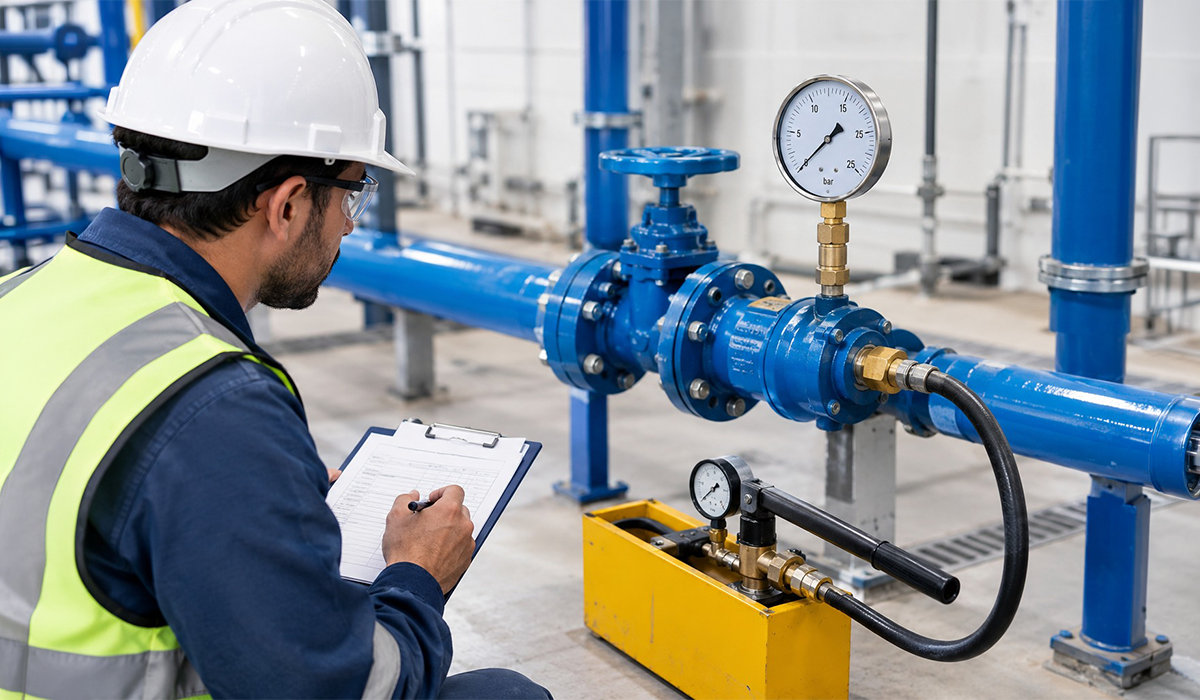
Plumbing pressure testing is an important verification stage used to assess whether newly installed pipework can withstand the pressure expected during normal operation. It helps professionals identify weaknesses in joints, connections, valves and sections of a water distribution network before the system is placed into regular use. Rather than treating testing as a final formality, it should form part of a structured installation and verification process.
A properly planned test provides useful information about how a system responds under controlled conditions. It can reveal pressure loss, concealed leakage and connection problems that may not be visible during a visual inspection. In commercial buildings, residential developments and larger facilities across Dubai, this process can help project teams address installation concerns before they develop into operational problems.
Why Plumbing Pressure Testing Matters Before System Handover
The main purpose of plumbing pressure testing is to verify the integrity of the pipe network under an appropriate test condition. A system may appear complete from the outside while still containing a poorly sealed joint or connection that could become problematic once normal water pressure is introduced. Testing provides a controlled opportunity to identify such weaknesses before occupants or facility teams depend on the system.
The value of this verification becomes particularly clear where pipework extends through walls, ceilings, service shafts or other areas that become difficult to access after completion. Detecting a fault at this stage can reduce the need for disruptive corrective work later. It also gives project teams clearer evidence that the installed network has been checked before handover.
A structured assessment normally considers several aspects rather than relying on pressure readings alone:
- condition of visible connections and fittings
- stability of pressure during the test period
- signs of water loss or leakage
- suitability of valves and temporary test arrangements
- results recorded at defined stages of the procedure
The exact approach depends on the type of system, pipe material, installation configuration and applicable project requirements. Testing should therefore be planned around the characteristics of the network rather than treated as an identical procedure for every building.
Preparing the Pipework Before Testing
Preparation has a direct influence on the usefulness of any pressure test. Before the test begins, the installation team needs to understand the section being assessed, confirm that relevant connections are complete and ensure that components not designed for the test condition are appropriately protected or isolated. Clear preparation also helps prevent misleading results caused by incomplete installation or unsuitable test arrangements.
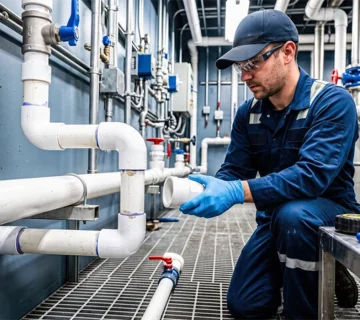
A detailed pipework inspection can identify visible issues before pressure is introduced into the system. Professionals may examine joints, fittings, supports, valves and accessible sections of pipe to establish whether the installation appears ready for controlled testing. Any obvious defect should be addressed before proceeding rather than relying on the test to expose every possible installation problem.
The preparation stage can include:
- confirming the test section and boundaries
- checking accessible joints and connections
- ensuring suitable test equipment is available
- isolating sensitive components where required
- confirming that the surrounding area is safe for testing
Good preparation also makes the final results easier to interpret. If the test section, equipment or conditions are poorly controlled, a pressure change may be difficult to attribute to a specific issue within the system.
How Pipe Pressure Testing Is Carried Out
Pipe pressure testing generally involves introducing a controlled test pressure into a defined section of the network and monitoring its behaviour over an agreed period. The system is observed for pressure changes and visible signs of leakage while the test conditions are maintained. The procedure should be carried out by suitably competent personnel using equipment appropriate to the system being assessed.
The test pressure and duration should not be selected arbitrarily. They depend on factors such as the pipe material, system design, operating conditions and applicable project specifications. Following the correct procedure helps ensure that the test provides meaningful information without placing unnecessary stress on components.
During testing, professionals may monitor:
- initial and subsequent pressure readings
- changes occurring during the defined test period
- visible leakage at accessible connections
- unusual behaviour around joints or fittings
- the condition of temporary testing equipment
A stable result does not remove the need for professional judgement. Test readings should be reviewed alongside installation information and inspection findings so that the condition of the network can be assessed properly.
Understanding Hydrostatic Pressure Testing
Hydrostatic pressure testing is commonly associated with testing pipe systems using water as the test medium. It allows professionals to place the pipework under a controlled pressure and observe whether the system maintains the required condition during the specified testing period.
The value of this approach comes from controlled verification rather than simply increasing pressure and looking for obvious leaks. A carefully conducted test can provide evidence about the integrity of joints and connections while allowing results to be documented for later review. The method selected should always reflect the system design, materials and project requirements.
Professionals also need to consider the condition of the pipework before applying the test. Air trapped within a system, temperature changes, equipment limitations or an incorrectly defined test section can affect readings and make results harder to interpret. For this reason, testing should be treated as a technical process that requires proper preparation and supervision.
What Happens When a Test Identifies a Problem?
A failed or inconclusive test does not necessarily mean that the entire installation needs to be replaced. The next step is usually to determine where the pressure loss or visible defect is occurring and establish whether the cause relates to a joint, fitting, valve, connection or another section of the network.
This is where systematic fault identification becomes valuable. Professionals can review the test section, inspect accessible components and repeat relevant checks after corrective work has been completed. The objective is to resolve the underlying issue rather than simply attempting to obtain a passing result.
Typical corrective actions may include:
- tightening or replacing unsuitable connections
- correcting defective joints
- replacing damaged fittings
- checking incorrectly installed valves
- retesting the affected section after corrective work
The corrective process should be documented so that project teams have a clear record of what was identified and how it was addressed. This is particularly useful for larger developments where several teams may be involved in installation, inspection and handover.
Connecting Testing With Plumbing Installation
Plumbing installation works involve more than positioning pipes and connecting fixtures. The completed system needs to function as intended, and verification provides an important link between physical installation and operational readiness.
Testing should therefore be considered within the wider installation workflow rather than as an isolated activity performed at the end. Planning the testing sequence in advance can help teams determine which sections need to be assessed, when access will be available and what documentation should be retained.
For projects in Dubai, this approach can help coordinate installation teams, consultants, contractors and facility representatives around clearly defined verification stages. It can also reduce confusion when multiple pipe sections are completed at different times. A structured testing programme provides a clearer basis for confirming which parts of the network have been assessed.
The Role of Professional Service Teams
Experienced plumbing company services can support businesses and project teams by combining installation knowledge with appropriate inspection and testing procedures. The value lies not simply in carrying out a pressure test, but in understanding the system being assessed and interpreting the findings in the context of the installation.
A professional team can help establish suitable testing stages, identify visible installation concerns, record relevant readings and recommend corrective action when required. This broader approach is useful when pipework forms part of a complex building environment where water supply, drainage and other mechanical systems need to be coordinated.
It helps create dependable handover documents since they contain descriptions from the testers of the results along with what the tester noticed as a problem and how it was corrected. This information is valuable to consulting engineers, contracting specialists and maintenance personnel after construction works.
Integrating Testing With Wider MEP Coordination
Pressure testing is one element of a broader technical process within building services. MEP services in Dubai often require different systems and specialist teams to work around shared plant rooms, service shafts, ceilings and access areas. Pipework verification therefore needs to be planned with sufficient awareness of the wider building-services environment.
Coordination is particularly important where pipework passes through areas containing electrical systems, air-conditioning equipment or other building-services installations. Test planning should account for access, protection and safe working conditions before water is introduced into the relevant section.
A coordinated approach can help project teams:
- establish clear responsibilities for testing
- minimise clashes with other specialist works
- maintain suitable access to service areas
- record testing information in an organised manner
- resolve identified problems before final handover
This makes testing more useful as part of overall project quality control rather than treating it as a standalone technical exercise.
Conclusion
Plumbing pressure testing provides an important means of verifying whether building pipework is ready for normal operation. If done properly, this process may assist in discovering problems such as low connections, pressure losses, etc., before it becomes hard to manage the problem. The success of this process depends on proper planning, right selection of test methods, right documentation, and proper result interpretation.
Lumens MEP supports building and project requirements through its wider plumbing and MEP capabilities, helping clients approach installation verification as part of a structured building-services process.
Frequently Asked Questions
This can help in identifying any leakages, connections, pressure loss, among other problems, which may influence the reliability of the pipe network. These results are then analyzed so that proper measures are undertaken prior to the normal running of the system.
Testing is generally planned after the relevant section of pipework has been installed and prepared, but before it becomes difficult to access or before the system is handed over for normal use. The exact timing depends on the project sequence and system requirements.
The problem becomes apparent the damaged part may be corrected and in case it is a good idea also be tested once more. The outcome must be looked at and recorded in such a way that the project team will always refer back to the process.