Electrical maintenance services should start with a clear understanding of how a property’s electrical installation currently operates. A professional inspection is not simply a matter of looking at panels, cables and equipment. It involves considering how the building is being used, what has changed since the original installation and whether the available records still reflect the present setup.
For properties in Dubai, this can be particularly relevant where older installations have been adapted over time. Refurbishments, changes in occupancy and the addition of new equipment can all affect the original electrical arrangement. Reviewing these changes first gives the inspection a more practical direction.
Electrical Maintenance Services: What Should a Professional Inspection Cover?
The scope of electrical maintenance services should be based on the property rather than a fixed procedure applied to every building. Existing drawings, service records and details of previous modifications can help establish what the inspection needs to address.
An electrical inspection services programme can then be planned around the property’s size, occupancy, equipment and daily operations. A busy commercial building, for example, may have very different inspection requirements from a smaller property with fewer electrical demands.
The initial review may look at:
- Areas that have undergone electrical or structural changes.
- Equipment added after the original installation.
- Distribution points serving important operations.
- Previous concerns that may still require attention.
This gives the inspection a clear starting point and helps avoid spending equal time on areas that do not carry the same level of importance.
Understanding Changes to the Existing Installation
Electrical systems often evolve alongside the buildings they serve. Offices are reorganised, equipment is replaced and new connections are added as operational needs change. As a result, the present installation may differ considerably from its original design.
An electrical system inspection can compare the current arrangement with available drawings and maintenance records. The aim is not simply to find differences. It is to understand whether those changes were properly documented and whether the records still provide an accurate picture of the installation.
Consider an office that has been divided into several additional work areas. New equipment may have been introduced at the same time, increasing the number of electrical connections in those spaces. Such changes can indicate where documentation should be reviewed or where further technical attention may be useful.
Considering Electrical Demand Across Different Areas
Not every part of a building places the same demand on its electrical infrastructure. A server room, commercial kitchen, workshop and standard office can operate very differently, even when they are within the same property.
The inspection should therefore take actual usage into account. Areas with long operating hours, high equipment loads or essential operations may deserve closer attention than spaces with limited electrical activity.
Factors worth considering include:
- The amount and type of equipment in each area.
- How frequently connected systems are operated.
- Recent changes to occupancy or internal layouts.
- Areas where an interruption could affect important activities.
This approach makes the inspection more closely connected to the way the building functions in everyday use.
Reviewing Distribution Points and Circuit Identification
Distribution points provide an important overview of how electrical power is organised throughout a property. Their condition matters, but so does the information surrounding them.
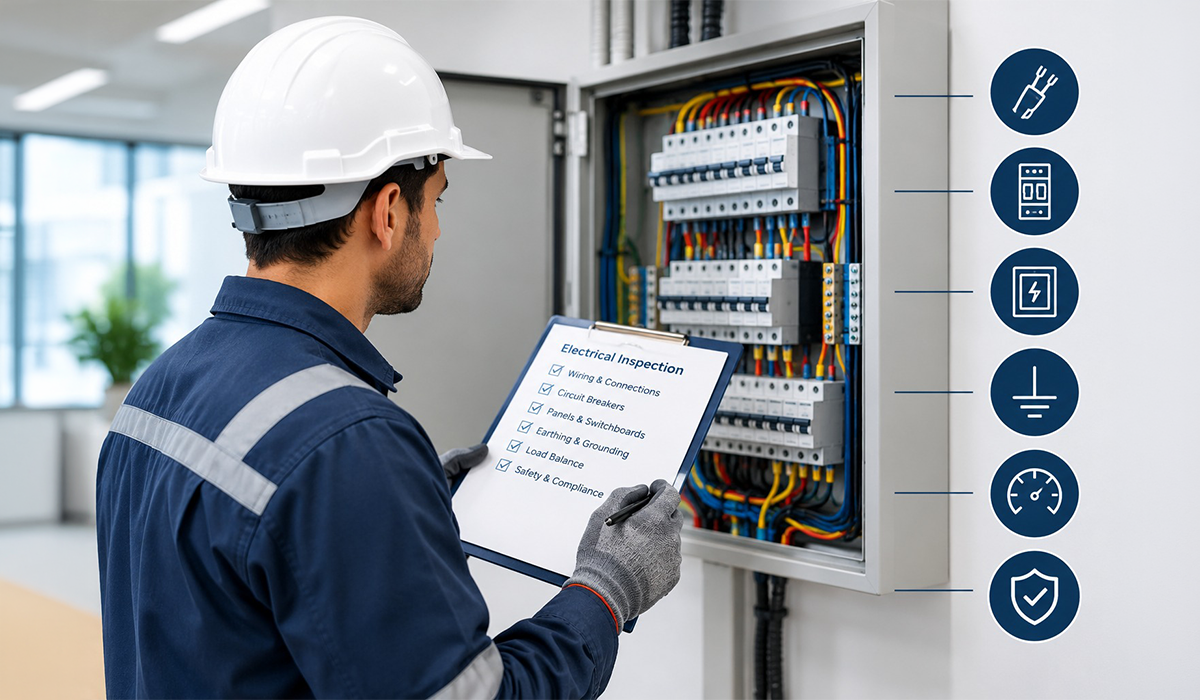
An electrical panel inspection can consider accessible identification, circuit labelling, surrounding conditions and whether the connected equipment corresponds with available records. Outdated or unclear labelling may not indicate an immediate technical problem, but it can make future maintenance and troubleshooting more difficult.
Keeping circuit information clear and current also helps technical teams work more efficiently when repairs, modifications or additional checks are required.
Examining Wiring Around Modified Areas
Electrical wiring can be affected by changes made elsewhere in a building. New partitions, ceiling work, equipment relocation and refurbishment can all alter the environment around existing cable routes.
An electrical wiring inspection can therefore look at accessible routing, physical protection and visible conditions around the installation. The purpose is not to examine every cable unnecessarily, but to identify areas where building changes may have affected the existing arrangement.
This is particularly useful in properties that have been renovated in stages. When newer construction meets an older installation, the relationship between the two deserves careful consideration.
Reviewing Protective Arrangements
Protective components need to be considered in the context of the circuits and equipment they serve. Looking at individual devices without considering the wider arrangement can provide only a limited picture.
An electrical safety inspection can review accessible protective components alongside relevant distribution points and connected systems. Changes to circuits or equipment may also indicate where additional technical verification could be appropriate.
It is important to distinguish inspection from testing. An inspection can identify visible conditions and potential areas of concern, while specialist testing is used when electrical performance needs to be measured or verified.
Using Equipment History to Add Context
A current inspection becomes more useful when it can be compared with what happened previously. Replacement records, repairs and earlier complaints may explain why certain equipment or areas deserve closer attention.
An electrical equipment inspection can take this history into account instead of treating every visit as an isolated assessment.
Useful background information may include:
- Previous service and inspection dates.
- Equipment replacement records.
- Reported electrical complaints.
- Details of previous modifications.
For example, a recurring concern recorded over several maintenance visits may require a different response from an issue that has appeared for the first time. Keeping this history available makes that distinction easier to identify.
Turning Findings Into Clear Recommendations
Not every observation found during an inspection requires immediate corrective work. Some may relate to documentation, identification or conditions that can be monitored over time.
An electrical maintenance checklist can help organise findings according to the action they may require. This makes the final report more useful to facility managers and other responsible teams.
Findings can be separated into categories such as:
- Matters requiring prompt attention.
- Work that can be planned for a suitable maintenance period.
- Areas requiring additional technical verification.
- Documentation or labelling updates.
- Conditions that can continue to be monitored.
The purpose is to create a clear connection between an observation and the next practical step.
Knowing When Further Investigation Is Appropriate
Some electrical concerns cannot be fully understood through a visual review alone. Recurring interruptions, unusual equipment behaviour or inconsistencies between the current installation and available records may indicate that a more detailed assessment is needed.
In these situations, the initial inspection can help narrow down the area requiring attention. Additional technical checks can then be carried out where there is a clear reason for them, rather than applying the same level of testing across the entire installation.
Keeping routine inspection and specialist testing as separate stages also makes the final report easier to understand. It shows what was observed during the visit while clearly identifying where further technical verification may be appropriate.
Making the Inspection Record Useful for Future Work
A detailed inspection is only as useful as the information that comes from it. A good report should explain what was reviewed, record significant observations and make any recommended follow-up easy to understand.
For organisations working with an electrical maintenance company in Dubai, clear documentation can help facility teams make sense of technical findings without having to revisit the entire inspection history.
The records could include details of the areas examined, relevant observations, images, where required, recommendations made and facts that need to be considered in a future visit. With time, these records will assist in establishing a more clear understanding of changes made on the electrical installation at the property.
Conclusion
Electrical maintenance services are more useful when an inspection reflects the actual condition and use of a property rather than relying on a generic list of components. Building modifications, electrical demand, distribution arrangements, wiring, protective devices and equipment history can all provide important context.
For properties in Dubai, this structured approach can be especially helpful when an electrical installation has developed through several stages of refurbishment or changes in use. It allows facility teams to distinguish between matters that need documentation updates, planned work and further technical assessment.
A well-prepared inspection should leave the property team with a clear understanding of what was reviewed, what was observed and what may need attention next. That makes the report useful beyond the inspection date and gives future maintenance decisions a stronger reference point.
Lumens MEP provides professional electrical maintenance solutions tailored to the needs of residential, commercial and industrial properties.
Frequently Asked Questions
It can include reviewing electrical records, distribution arrangements, accessible wiring, protective components, equipment history and changes made to the property. The exact scope depends on the building’s systems and operational requirements.
Previous records can show when equipment was replaced, which modifications were made and whether particular concerns have appeared before. This background helps provide context when assessing the current installation.
No. A routine inspection can identify areas that may need additional technical verification, but specialist testing is generally considered when the observations indicate that further measurement or diagnosis is necessary.